Artificial Turf Rolls
Compare Turf Specs Side by Side
Compare current turf specifications. Every current turf line carries Festival Turf's 15-year prorated limited warranty.
Hydro Luxe
HL80
Turf & Build
- Pile height
- 1.65 in
- Face weight
- 60 oz/sq yd (highest)
- Total weight
- 80 oz/sq yd (highest)
- Gauge
- —
- Construction
- —
Yarn
- Yarn type
- —
- Composition
- —
- Dtex
- —
- Face colors
- Vine Cyan and Vine Green
- Thatch color
- —
- Thatch form
- —
Backing
- Primary backing
- —
- Primary backing weight
- —
- Finish coat
- —
- Finish coat weight
- —
- Drainage
- —
Roll & Coverage
- Roll width
- —
- Roll length
- —
- Coverage
- 1,500 sq ft per roll
- Coverage (sq yd)
- —
- Roll diameter
- —
- Roll weight
- —
- Roll weight per sq ft
- —
Compliance
- Lead
- —
- Cadmium
- —
- Mercury
- —
- PFAS
- —
- Impact attenuation
- —
- Green speed
- —
- Quality standard
- —
Warranty
- Limited warranty
- 15-year prorated manufacturer warranty
- Approved use
- —
Olive 65
O65
Turf & Build
- Pile height
- 1.26 in
- Face weight
- 40 oz/sq yd
- Total weight
- 65 oz/sq yd
- Gauge
- —
- Construction
- —
Yarn
- Yarn type
- —
- Composition
- —
- Dtex
- —
- Face colors
- Olive and Jane Lime over a green and yellow thatch
- Thatch color
- —
- Thatch form
- —
Backing
- Primary backing
- —
- Primary backing weight
- —
- Finish coat
- —
- Finish coat weight
- —
- Drainage
- —
Roll & Coverage
- Roll width
- —
- Roll length
- —
- Coverage
- 1,500 sq ft per roll
- Coverage (sq yd)
- —
- Roll diameter
- —
- Roll weight
- —
- Roll weight per sq ft
- —
Compliance
- Lead
- —
- Cadmium
- —
- Mercury
- —
- PFAS
- —
- Impact attenuation
- —
- Green speed
- —
- Quality standard
- —
Warranty
- Limited warranty
- 15-year prorated manufacturer warranty
- Approved use
- —
Pro 65
P65
Turf & Build
- Pile height
- 1.26 in
- Face weight
- 40 oz/sq yd
- Total weight
- 65 oz/sq yd
- Gauge
- —
- Construction
- —
Yarn
- Yarn type
- —
- Composition
- —
- Dtex
- —
- Face colors
- Fern Cyan and Fern Green
- Thatch color
- —
- Thatch form
- —
Backing
- Primary backing
- —
- Primary backing weight
- —
- Finish coat
- —
- Finish coat weight
- —
- Drainage
- —
Roll & Coverage
- Roll width
- —
- Roll length
- —
- Coverage
- 1,500 sq ft per roll
- Coverage (sq yd)
- —
- Roll diameter
- —
- Roll weight
- —
- Roll weight per sq ft
- —
Compliance
- Lead
- —
- Cadmium
- —
- Mercury
- —
- PFAS
- —
- Impact attenuation
- —
- Green speed
- —
- Quality standard
- —
Warranty
- Limited warranty
- 15-year prorated manufacturer warranty
- Approved use
- —
Dimensional values are stated by the factory as approximate. A dash means the factory has not published that value for the SKU. Materials only — base, infill, and installation are by others.
Not sure which one fits?
Call (619) 717-1342 and we'll narrow it down in a couple of minutes.
Superior Turf Direct supplies materials only and does not install. We are not licensed as contractors in California, Nevada, or Arizona, and we do not hold ourselves out as contractors in any state. Installation must be performed by an appropriately licensed contractor where the law requires one. cslb.ca.gov
Installed performance depends on base preparation, compaction, drainage design, seaming, fastening, infill selection where applicable, site conditions, subsurface drainage, traffic, weather, and maintenance — none of which is supplied or controlled by Superior. Read the full disclaimer.
Trade planning notes
What should a contractor confirm before ordering turf?
By Superior Turf Direct — materials team · Last updated
- Inspect the site before specifying the roll: existing soil, low spots, tree roots, irrigation serving retained plants, and the proposed drainage outlet.
- Have the installer define excavation, aggregate selection, grading and compaction for the actual soil and intended use. A permeable backing cannot correct a blocked outlet or a poorly prepared base.
- Lay out the roll direction and seams on a measured plan before ordering. Keep adjoining pieces oriented consistently and account for curves, obstacles and offcuts rather than buying only the finished surface area.
- Confirm infill type and application quantity for the selected turf and use. Bag weight is not a universal coverage specification. Keep product warnings and handling instructions with the crew.
- At handover, record the turf line and lot, drainage route, seam locations and maintenance responsibilities. Retain material documents for future repairs and warranty questions.
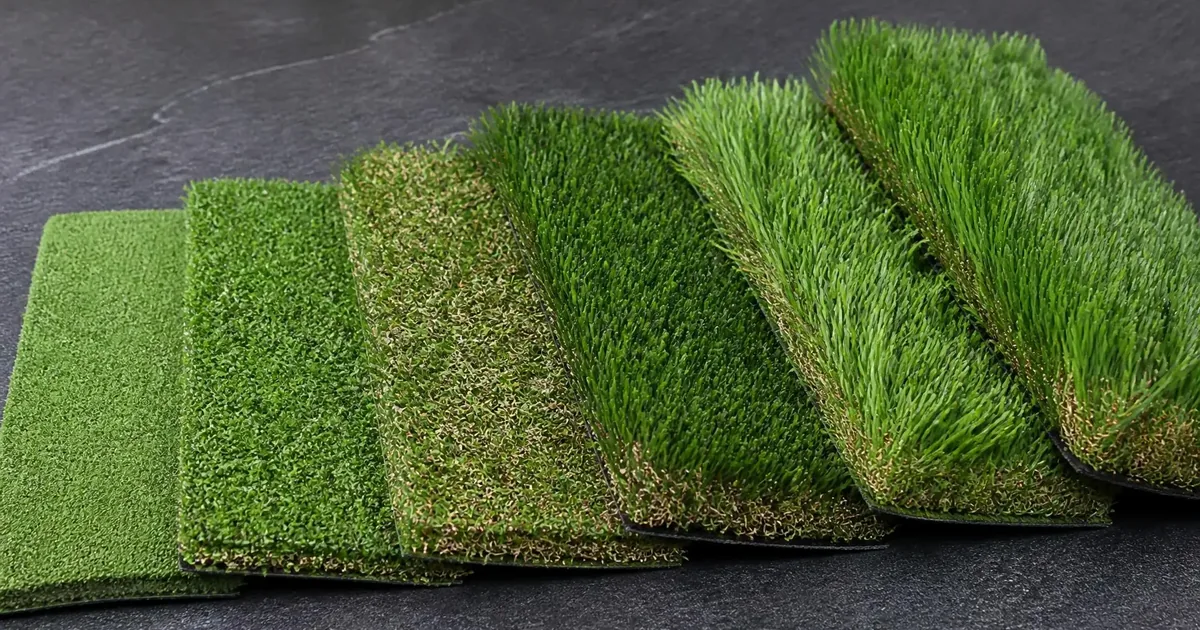
Which specification answers which buying question?
| Check | Useful for | Still confirm |
|---|---|---|
| Pile height and face weight | Comparing the stated fiber construction | Texture in a physical sample, intended use and the complete specification |
| Roll layout | Planning joins and material quantities | Grain direction, trim allowance and access to the site |
| Infill and backing | Planning the complete surface assembly | Site drainage, maintenance and application-specific requirements |
What maintenance should be planned from day one?
Assign a regular debris inspection and removal routine. In pet areas, remove solid waste promptly and plan rinsing with an available water source and a working drain. Inspect seams, edges and displaced infill after heavy use or storms; brush and replenish only according to the selected product instructions. Set the frequency to actual traffic, nearby trees and site conditions rather than promising a maintenance-free surface.
How do heat and water use affect the specification?
Synthetic turf can become hot in direct sun. Plan shade, surface-temperature checks and the timing of pet or play use; do not assume the surface stays cool because it looks green. Replacing an irrigated lawn changes watering needs, but trees and retained plants still need an irrigation plan, and cleaning can require water. No project-specific reduction is promised without a measured baseline.
These are material-planning checkpoints for independent contractors, not a site design or an installation service. Confirm construction requirements with the project designer and the installer.
Discuss material specifications: (619) 717-1342Sources and project references
Related reading
- How delivery and roll math actually work when you order turfRoll width drives the take-off, not square footage. Here is how material is cut, packed and moved, and where the waste really comes from.
- Reading a roll: pile height, face weight, backing, and when each mattersFive numbers decide almost every specification. Here is what each one measures and the job conditions that make it the deciding one.
- Specifying turf for commercial versus residential jobsThe same catalogue, a different decision. Traffic pattern, documentation and the replacement cycle move the specification more than the site size does.
- How to buy artificial turf for a commercial installationWhat belongs in the spec, the questions to ask before you commit, and how a written quote turns into a confirmed order.
- Matching turf specs to the job: how not to over- or under-specStart from the use case, not the heaviest sheet. A practical way to weigh face weight, pile height and backing against what the area will actually see.